
Creativity Is Taught Backwards
On learning, creativity, and the cost of misunderstanding both
Published
22 Jan, 2026
Topic
Design
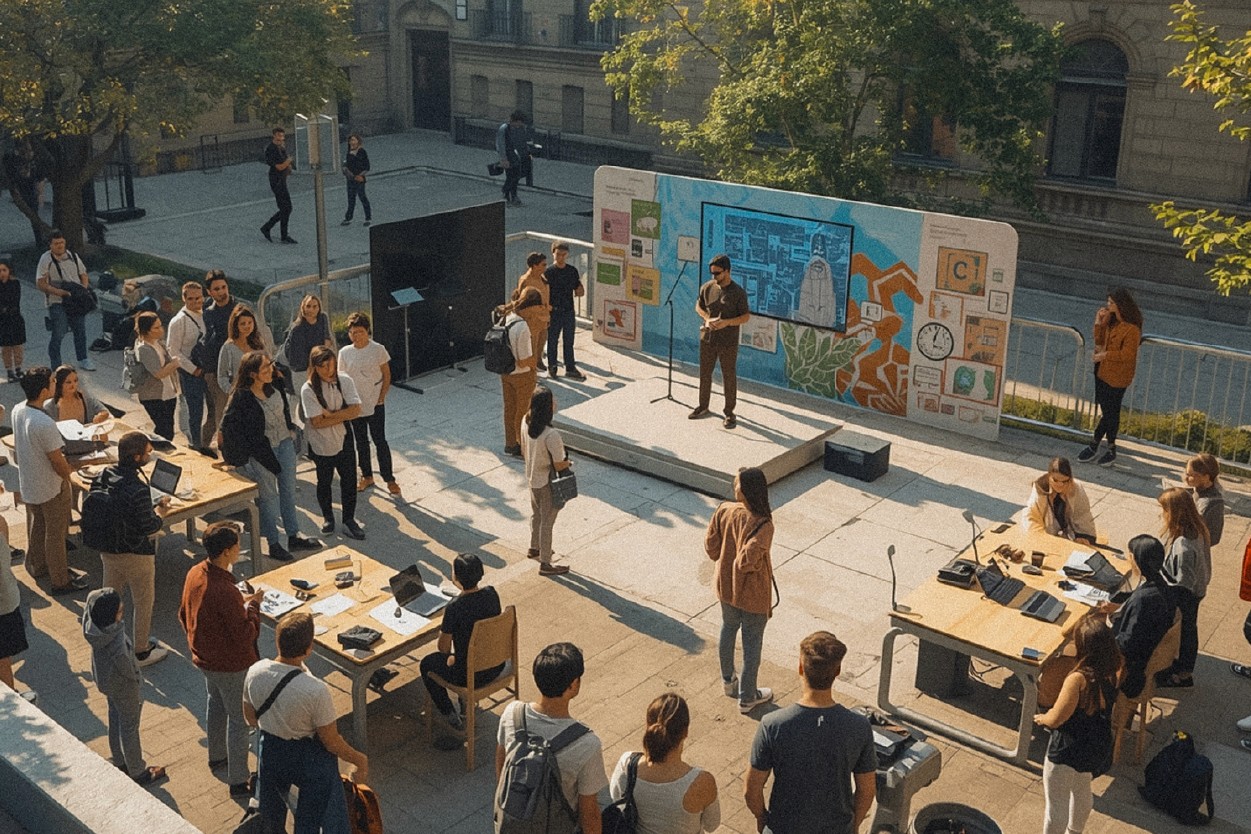
Creativity is the most misunderstood thing in education. Especially in University. We talk about it as a discipline — something you study, specialise in, and eventually graduate from, when at its core, creativity is a way of thinking. A way of solving problems. A natural form of entrepreneurship: seeing what doesn’t work, imagining what could, and doing something about it.
Look at how we train people in healthcare. Doctors, nurses, surgeons — they spend a huge portion of their education embedded in the real world. Hospitals. Patients. Pressure. Consequences. They don’t wait three years to discover what the job actually feels like. Meanwhile, creative students can spend the entirety of their degree inside simulated environments, shielded from real constraints, real clients, and real impact, only to be thrown into it all at once after graduating (if they’re lucky).
For many creatives, the first year in industry teaches more than the entire degree. Real work demands exploration, curiosity, and learning how to think under real constraints, not in theory.
By contrast, later years of university often offer freedom without direction — self-led making with little guidance on how ideas develop or survive beyond the studio. Education should expand possibility and agency, not leave students navigating it alone. Too often, we do the opposite.
This isn’t just opinion. In one of IBM’s largest global CEO studies, creativity was ranked as the most important leadership quality for navigating an increasingly complex world. Not technical skill. Not efficiency. Creativity.
Yet universities still train creatives for outputs, not leadership. Students are taught how to follow briefs, and refine style, but rarely how to think strategically, exercise judgement, or operate in uncertainty. The very qualities CEOs or employers as a whole, say matter most are the ones creative education leaves underdeveloped.
You can see this disconnect play out in the real world. Despite creativity being cited as a core leadership quality, many creative roles offer little progression into leadership. Management and director positions are often hired externally, rather than developed internally. Not because creatives lack potential, but because leadership has never been part of their education.
In a well-known TED Talk, Sir Ken Robinson challenges the way education approaches creativity. One of his most quoted ideas is that we don’t grow into creativity — we grow out of it. Children are born creative. Curious. Unafraid of being wrong. Somewhere along the way, that instinct is trained out in favour of correctness, hierarchy, and specialisation. By the time students reach university, creativity is often treated as a fragile thing that needs protecting, when in reality, it only becomes valuable when tested against real problems.
Add to this the cost. In the UK, students are paying eye-watering fees for degrees that increasingly struggle to justify their value. It’s no surprise that apprenticeships, alternative education models, and self-directed learning paths are gaining ground. Not because university is useless, but because the world has moved on, and education hasn’t kept up.
If we’re serious about preparing people for the future, we need to rethink what creative education is for.
Less funnelling into job titles. More problem-solving. More real-world challenges. More exposure to business, communication, leadership, and collaboration across disciplines.
A future university wouldn’t just teach students how to make things, it would teach them how to think, how to adapt, and how to create value in an ever-changing world. Because creativity isn’t a discipline you graduate from. It’s the human ability to receive possibility and give it shape — carrying it with you in everything you do.
If this sparked something, pass it on.
If this sparked something, pass it on.
Creativity is the most misunderstood thing in education. Especially in University. We talk about it as a discipline — something you study, specialise in, and eventually graduate from, when at its core, creativity is a way of thinking. A way of solving problems. A natural form of entrepreneurship: seeing what doesn’t work, imagining what could, and doing something about it.
Look at how we train people in healthcare. Doctors, nurses, surgeons — they spend a huge portion of their education embedded in the real world. Hospitals. Patients. Pressure. Consequences. They don’t wait three years to discover what the job actually feels like. Meanwhile, creative students can spend the entirety of their degree inside simulated environments, shielded from real constraints, real clients, and real impact, only to be thrown into it all at once after graduating (if they’re lucky).
For many creatives, the first year in industry teaches more than the entire degree. Real work demands exploration, curiosity, and learning how to think under real constraints, not in theory.
By contrast, later years of university often offer freedom without direction — self-led making with little guidance on how ideas develop or survive beyond the studio. Education should expand possibility and agency, not leave students navigating it alone. Too often, we do the opposite.
This isn’t just opinion. In one of IBM’s largest global CEO studies, creativity was ranked as the most important leadership quality for navigating an increasingly complex world. Not technical skill. Not efficiency. Creativity.
Yet universities still train creatives for outputs, not leadership. Students are taught how to follow briefs, and refine style, but rarely how to think strategically, exercise judgement, or operate in uncertainty. The very qualities CEOs or employers as a whole, say matter most are the ones creative education leaves underdeveloped.
You can see this disconnect play out in the real world. Despite creativity being cited as a core leadership quality, many creative roles offer little progression into leadership. Management and director positions are often hired externally, rather than developed internally. Not because creatives lack potential, but because leadership has never been part of their education.
In a well-known TED Talk, Sir Ken Robinson challenges the way education approaches creativity. One of his most quoted ideas is that we don’t grow into creativity — we grow out of it. Children are born creative. Curious. Unafraid of being wrong. Somewhere along the way, that instinct is trained out in favour of correctness, hierarchy, and specialisation. By the time students reach university, creativity is often treated as a fragile thing that needs protecting, when in reality, it only becomes valuable when tested against real problems.
Add to this the cost. In the UK, students are paying eye-watering fees for degrees that increasingly struggle to justify their value. It’s no surprise that apprenticeships, alternative education models, and self-directed learning paths are gaining ground. Not because university is useless, but because the world has moved on, and education hasn’t kept up.
If we’re serious about preparing people for the future, we need to rethink what creative education is for.
Less funnelling into job titles. More problem-solving. More real-world challenges. More exposure to business, communication, leadership, and collaboration across disciplines.
A future university wouldn’t just teach students how to make things, it would teach them how to think, how to adapt, and how to create value in an ever-changing world. Because creativity isn’t a discipline you graduate from. It’s the human ability to receive possibility and give it shape — carrying it with you in everything you do.