
Design Was Never Meant to Be This Fast
On collaboration, creation, and the cost of outpacing ourselves
Published
20 Dec, 2025
Topic
Design
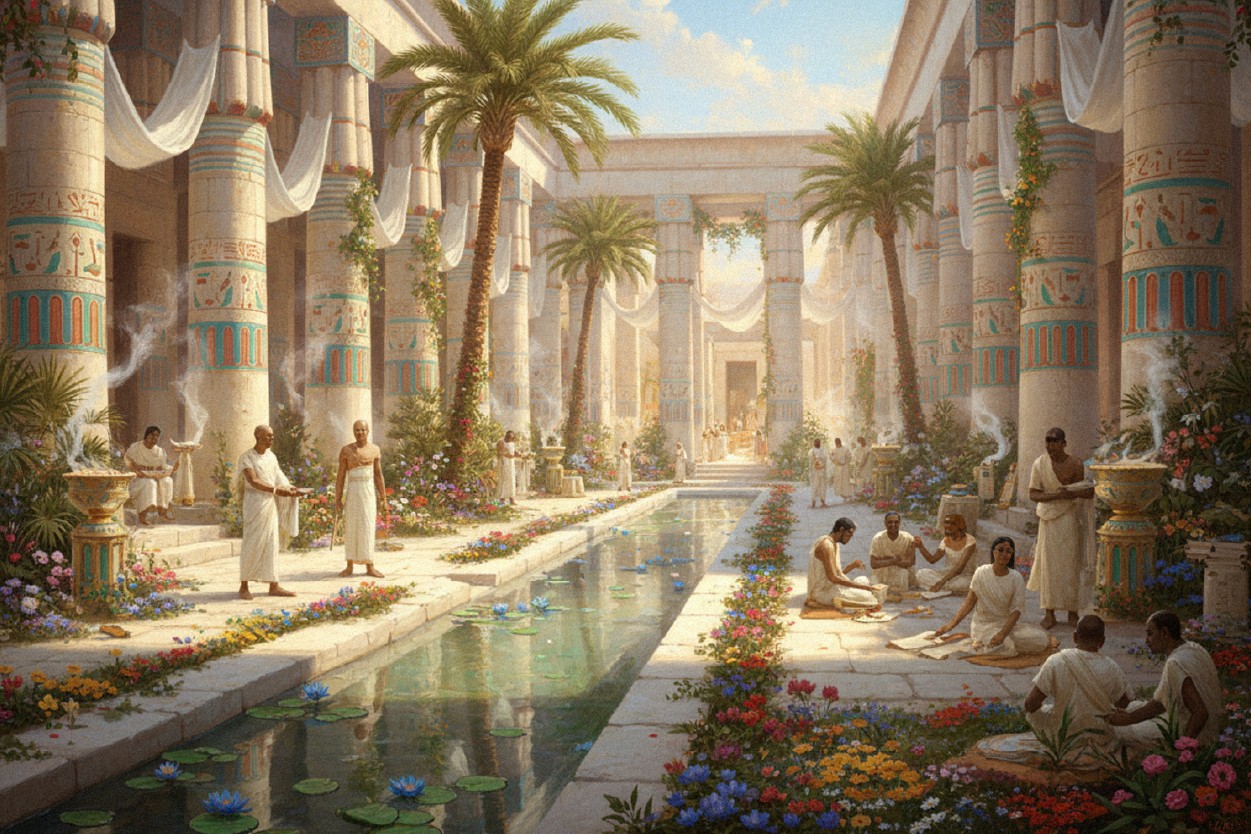
Before design became an industry, it was a way of understanding the world. The first language. A shared reference point for how people lived, gathered, built, and believed. What was made wasn’t just useful — it meant something. It told stories. It created order. It gave people a sense of place within something bigger than themselves.
In Ancient Egypt, this way of thinking was embedded into life itself. Temples weren’t simply places of worship — they were living, breathing spaces where the spiritual, social, and practical lives of a civilisation met under one roof. To enter these spaces was to step into a shared understanding of the world — how to live, how to relate, how to belong.
Turning belief into form gave creativity weight and meaning, signalling its importance to society itself. Shaped over time by the people who built and used them, these structures stood as symbols of collective creation, and of the heights of human achievement made possible through shared purpose. Design wasn’t decoration; it was destiny.
These projects were never the work of a single discipline. They brought together carpenters, masons, engineers, scribes, artists, astronomers — entire professions working in alignment. Each craft distinct, but none isolated. The project became the shared language. Meaning emerged through collective effort, time, and commitment.
Of course, the world has changed. Most work now happens on screens rather than stone. Creation lives in software and systems. We’re building networks instead of monuments. That shift isn’t the problem. And hierarchy, funding, and constraint have always shaped what gets built. The difference is not that these forces exist, but that they now dominate the conversation entirely.
We’ve become incredibly good at building systems — less good at evolving alongside them.
As time compresses and money becomes the primary measure of value, the conditions required for meaningful creation quietly disappear. Creation is pushed to move faster, flatter, and safer. Deadlines define direction. Budgets define ambition. The long hours of refinement, the shared struggle, the patience required to make something right rather than simply finished are reframed as inefficiencies rather than essentials.
We still research. We still immerse. We still run workshops and discovery phases. But they are often tightly scoped, time-boxed, and required to justify themselves quickly. Exploration is permitted, but only insofar as it remains safe, rarely allowed to change the brief, challenge the structure, or demand more than what was agreed.
The industry didn’t lose its process. It lowered its expectations of what the process could yield.
What was once a space for transformation has become a step toward alignment with predetermined outcomes. Creation still functions — but it no longer carries the same weight. The same stakes. The same sense that something lasting, something meaningful, is being shaped through the work itself.
Somewhere along the way, the focus shifted from making something together to getting everyone to agree with it.
Ideas are shaped, then filtered through layers of approval from people increasingly removed from the act of making. And in that flattening of intent, the work not only loses depth — it often struggles to justify its value, and its funding, in the first place.
Today, we speak about collaboration as if it were something we’ve lost and are trying to recreate. Co-working spaces. Open offices. Offsites, perks, curated “creative cultures.” A slice of damn pizza. On the surface, they promise connection. In practice, they’re often attempts to decorate around conditions that were deliberately removed — time, trust, proximity, and shared risk.
True co-creation can’t be styled into existence. It isn’t a vibe or a benefit. It doesn’t come from proximity alone. It comes from shared belief, trust, and time — the very things modern systems are designed to minimise in the name of efficiency. When collaboration is reduced to approval loops and culture becomes performative, the work might still function, but it no longer feels alive.
Before design became an industry, it was a way of understanding the world. The first language. A shared reference point for how people lived, gathered, built, and believed. What was made wasn’t just useful — it meant something. It told stories. It created order. It gave people a sense of place within something bigger than themselves.
In Ancient Egypt, this way of thinking was embedded into life itself. Temples weren’t simply places of worship — they were living, breathing spaces where the spiritual, social, and practical lives of a civilisation met under one roof. To enter these spaces was to step into a shared understanding of the world — how to live, how to relate, how to belong.
Turning belief into form gave creativity weight and meaning, signalling its importance to society itself. Shaped over time by the people who built and used them, these structures stood as symbols of collective creation, and of the heights of human achievement made possible through shared purpose. Design wasn’t decoration; it was destiny.
These projects were never the work of a single discipline. They brought together carpenters, masons, engineers, scribes, artists, astronomers — entire professions working in alignment. Each craft distinct, but none isolated. The project became the shared language. Meaning emerged through collective effort, time, and commitment.
Of course, the world has changed. Most work now happens on screens rather than stone. Creation lives in software and systems. We’re building networks instead of monuments. That shift isn’t the problem. And hierarchy, funding, and constraint have always shaped what gets built. The difference is not that these forces exist, but that they now dominate the conversation entirely.
We’ve become incredibly good at building systems — less good at evolving alongside them.
As time compresses and money becomes the primary measure of value, the conditions required for meaningful creation quietly disappear. Creation is pushed to move faster, flatter, and safer. Deadlines define direction. Budgets define ambition. The long hours of refinement, the shared struggle, the patience required to make something right rather than simply finished are reframed as inefficiencies rather than essentials.
We still research. We still immerse. We still run workshops and discovery phases. But they are often tightly scoped, time-boxed, and required to justify themselves quickly. Exploration is permitted, but only insofar as it remains safe, rarely allowed to change the brief, challenge the structure, or demand more than what was agreed.
And yet, there is a quiet magic in the messiness of creation. In not knowing straight away. In staying with uncertainty long enough for something meaningful to surface. Purpose doesn’t arrive fully formed — it reveals itself through friction, dialogue, and time. Through the act of making itself.
The industry didn’t lose its process. It lowered its expectations of what the process could yield.
What was once a space for transformation has become a step toward alignment with predetermined outcomes. Creation still functions — but it no longer carries the same weight. The same stakes. The same sense that something lasting, something meaningful, is being shaped through the work itself.
Somewhere along the way, the focus shifted from making something together to getting everyone to agree with it.
Ideas are shaped, then filtered through layers of approval from people increasingly removed from the act of making. And in that flattening of intent, the work not only loses depth — it often struggles to justify its value, and its funding, in the first place.
Today, we speak about collaboration as if it were something we’ve lost and are trying to recreate. Co-working spaces. Open offices. Offsites, perks, curated “creative cultures.” A slice of damn pizza. On the surface, they promise connection. In practice, they’re often attempts to decorate around conditions that were deliberately removed — time, trust, proximity, and shared risk.
True co-creation can’t be styled into existence. It isn’t a vibe or a benefit. It doesn’t come from proximity alone. It comes from shared belief, trust, and time — the very things modern systems are designed to minimise in the name of efficiency. When collaboration is reduced to approval loops and culture becomes performative, the work might still function, but it no longer feels alive.
Before design became an industry, it was a way of understanding the world. The first language. A shared reference point for how people lived, gathered, built, and believed. What was made wasn’t just useful — it meant something. It told stories. It created order. It gave people a sense of place within something bigger than themselves.
In Ancient Egypt, this way of thinking was embedded into life itself. Temples weren’t simply places of worship — they were living, breathing spaces where the spiritual, social, and practical lives of a civilisation met under one roof. To enter these spaces was to step into a shared understanding of the world — how to live, how to relate, how to belong.
Turning belief into form gave creativity weight and meaning, signalling its importance to society itself. Shaped over time by the people who built and used them, these structures stood as symbols of collective creation, and of the heights of human achievement made possible through shared purpose. Design wasn’t decoration; it was destiny.
These projects were never the work of a single discipline. They brought together carpenters, masons, engineers, scribes, artists, astronomers — entire professions working in alignment. Each craft distinct, but none isolated. The project became the shared language. Meaning emerged through collective effort, time, and commitment.
Of course, the world has changed. Most work now happens on screens rather than stone. Creation lives in software and systems. We’re building networks instead of monuments. That shift isn’t the problem. And hierarchy, funding, and constraint have always shaped what gets built. The difference is not that these forces exist, but that they now dominate the conversation entirely.
We’ve become incredibly good at building systems — less good at evolving alongside them.
As time compresses and money becomes the primary measure of value, the conditions required for meaningful creation quietly disappear. Creation is pushed to move faster, flatter, and safer. Deadlines define direction. Budgets define ambition. The long hours of refinement, the shared struggle, the patience required to make something right rather than simply finished are reframed as inefficiencies rather than essentials.
We still research. We still immerse. We still run workshops and discovery phases. But they are often tightly scoped, time-boxed, and required to justify themselves quickly. Exploration is permitted, but only insofar as it remains safe — rarely allowed to change the brief, challenge the structure, or demand more than what was agreed.
And yet, there is a quiet magic in the messiness of creation. In not knowing straight away. In staying with uncertainty long enough for something meaningful to surface. Purpose doesn’t arrive fully formed — it reveals itself through friction, dialogue, and time. Through the act of making itself.
The industry didn’t lose its process. It lowered its expectations of what the process could yield.
What was once a space for transformation has become a step toward alignment with predetermined outcomes. Creation still functions — but it no longer carries the same weight. The same stakes. The same sense that something lasting, something meaningful, is being shaped through the work itself.
Somewhere along the way, the focus shifted from making something together to getting everyone to agree with it. Ideas are shaped, then filtered through layers of approval from people increasingly removed from the act of making. And in that flattening of intent, the work not only loses depth — it often struggles to justify its value, and its funding, in the first place.
Today, we speak about collaboration as if it were something we’ve lost and are trying to recreate. Co-working spaces. Open offices. Offsites, perks, curated “creative cultures.” A slice of damn pizza. On the surface, they promise connection. In practice, they’re often attempts to decorate around conditions that were deliberately removed — time, trust, proximity, and shared risk.
True co-creation can’t be styled into existence. It isn’t a vibe or a benefit. It doesn’t come from proximity alone. It comes from shared belief, trust, and time — the very things modern systems are designed to minimise in the name of efficiency. When collaboration is reduced to approval loops and culture becomes performative, the work might still function — but it no longer feels alive. We didn’t lose our soul. We outpaced it.
Before design became an industry, it was a way of understanding the world. The first language. A shared reference point for how people lived, gathered, built, and believed. What was made wasn’t just useful — it meant something. It told stories. It created order. It gave people a sense of place within something bigger than themselves.
In Ancient Egypt, this way of thinking was embedded into life itself. Temples weren’t simply places of worship — they were living, breathing spaces where the spiritual, social, and practical lives of a civilisation met under one roof. To enter these spaces was to step into a shared understanding of the world — how to live, how to relate, how to belong.
Turning belief into form gave creativity weight and meaning, signalling its importance to society itself. Shaped over time by the people who built and used them, these structures stood as symbols of collective creation, and of the heights of human achievement made possible through shared purpose. Design wasn’t decoration; it was destiny.
These projects were never the work of a single discipline. They brought together carpenters, masons, engineers, scribes, artists, astronomers — entire professions working in alignment. Each craft distinct, but none isolated. The project became the shared language. Meaning emerged through collective effort, time, and commitment.
Of course, the world has changed. Most work now happens on screens rather than stone. Creation lives in software and systems. We’re building networks instead of monuments. That shift isn’t the problem. And hierarchy, funding, and constraint have always shaped what gets built. The difference is not that these forces exist, but that they now dominate the conversation entirely.
We’ve become incredibly good at building systems — less good at evolving alongside them.
As time compresses and money becomes the primary measure of value, the conditions required for meaningful creation quietly disappear. Creation is pushed to move faster, flatter, and safer. Deadlines define direction. Budgets define ambition. The long hours of refinement, the shared struggle, the patience required to make something right rather than simply finished are reframed as inefficiencies rather than essentials.
We still research. We still immerse. We still run workshops and discovery phases. But they are often tightly scoped, time-boxed, and required to justify themselves quickly. Exploration is permitted, but only insofar as it remains safe, rarely allowed to change the brief, challenge the structure, or demand more than what was agreed.
And yet, there is a quiet magic in the messiness of creation. In not knowing straight away. In staying with uncertainty long enough for something meaningful to surface. Purpose doesn’t arrive fully formed — it reveals itself through friction, dialogue, and time. Through the act of making itself.
The industry didn’t lose its process. It lowered its expectations of what the process could yield.
What was once a space for transformation has become a step toward alignment with predetermined outcomes. Creation still functions — but it no longer carries the same weight. The same stakes. The same sense that something lasting, something meaningful, is being shaped through the work itself.
Somewhere along the way, the focus shifted from making something together to getting everyone to agree with it.
Ideas are shaped, then filtered through layers of approval from people increasingly removed from the act of making. And in that flattening of intent, the work not only loses depth — it often struggles to justify its value, and its funding, in the first place.
Today, we speak about collaboration as if it were something we’ve lost and are trying to recreate. Co-working spaces. Open offices. Offsites, perks, curated “creative cultures.” A slice of damn pizza. On the surface, they promise connection. In practice, they’re often attempts to decorate around conditions that were deliberately removed — time, trust, proximity, and shared risk.
True co-creation can’t be styled into existence. It isn’t a vibe or a benefit. It doesn’t come from proximity alone. It comes from shared belief, trust, and time — the very things modern systems are designed to minimise in the name of efficiency. When collaboration is reduced to approval loops and culture becomes performative, the work might still function, but it no longer feels alive.